Homeowner’s Concerns
We have spent months carefully reviewing and analyzing HOA records to ensure that every statement we make is factual and accurate. Homeowners deserve full transparency about the decisions that have shaped—and continue to shape—our community. Each action taken by the Board impacts all of us.
The information provided here is for your awareness and understanding. The candidates featured on this website have not served on the current Board and had no involvement in the decisions that led to the issues being shared.
NEGATIVE FINANCIAL NET WORTH
This document analyzes the Charleston Court HOA’s financial position from 2017 to 2024, focusing on when the Association began operating with negative net worth (negative fund balance). It is based on the annual balance sheets from 2017 through 2024.
DownloadKey Findings:
– The HOA maintained a positive financial position from 2017 through 2020.
– In 2021, after initiating the roof loan for $557K, the HOA’s fund balance became negative.
– By 2022, after increasing the loan to $1.117M (to include flat roofs and other overruns), the negative equity deepened significantly.
– The HOA has remained in deficit each year since, with total equity at negative $167,699.73 as of the end of 2024.
– Even with some interest paid down, the community still owes nearly $900K on the loan.
– This negative equity means the HOA’s liabilities exceed its assets, putting financial strain on future budgets and raising concerns for lenders, insurers, and resale disclosures.
Charleston Court HOA – Why We are in Debt
Charleston Court’s current debt appears to be connected to past decisions to finance certain exterior projects—such as porch and balcony roof repairs—using Association funds and borrowed money. These projects, while intended to protect property values and address immediate needs, were not consistently classified the same way in the governing documents as other shared expenses.
Because of this uncertainty, the Association assumed costs that may have exceeded the original financial planning for these types of repairs. As a result, funds were redirected from reserves and operating budgets, contributing to the debt the community is now working to manage.
Our goal moving forward is to ensure clearer interpretation of responsibilities, more consistent financial planning, and improved communication so homeowners understand how and why major expenses are funded.
Landscaping Decline and Mismanagement
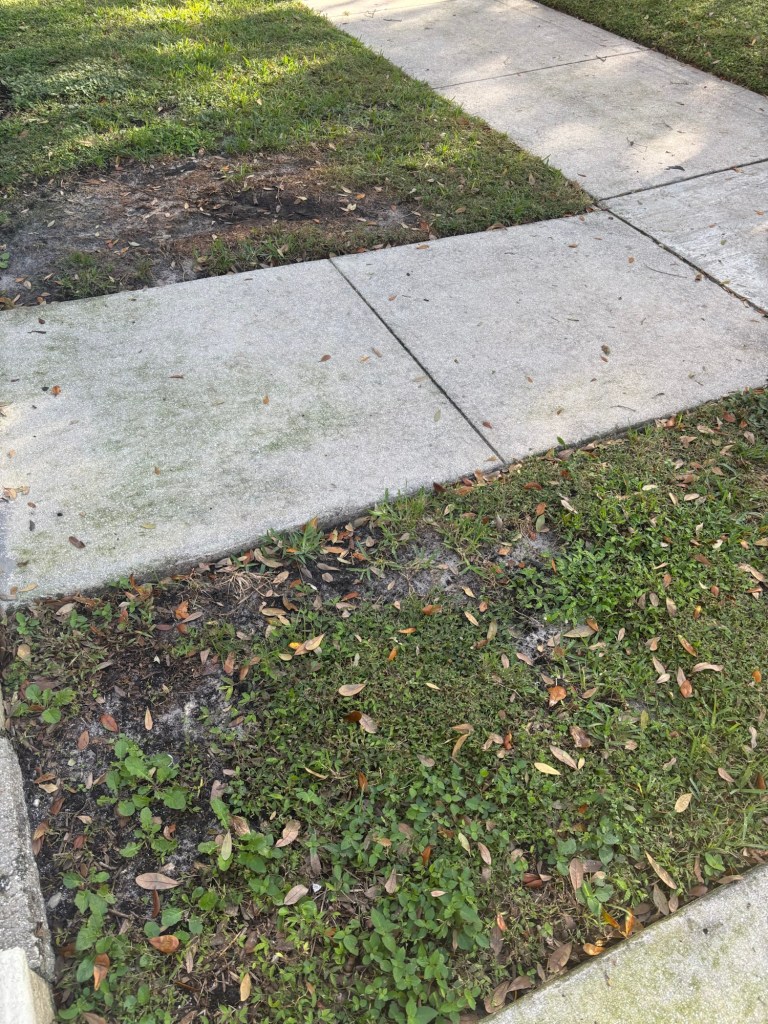
The community’s landscaping has steadily declined, with weeds overtaking lawns, poor maintenance, and little oversight. Despite strong homeowner support for a new vendor, D2E, which offered a better plan and the same cost, the Board voted to keep FTGU Landscaping.
Landscaping: A Clear Homeowner Concern
At a recent board of directors meeting the directors told me when asked, landscaping project did not cost $100K and trees were not removed. Many of you shared disappointment when the healthy magnolia trees in your yard were dug up without your approval and replaced with some other” little tree”. You also shared how difficult it was to enter and exit your cars in your two car driveway.
Our Declaration of Covenants is clear about when trees may be removed: only if a tree is dead or diseased or if there is a safety concern. Despite this, the Board removed healthy magnolia and palm trees from homeowner backyards without following these requirements. Even more concerning, when homeowners later asked for removal of Board-installed trees due to safety issues—such as difficulty to safely enter and exit cars—those requests were dismissed.
After hearing from many of you what you experienced, I decided to dig in and find out what actually our Governing documents say. If you have any questions, please do not hesitate to ask us, we will always keep you informed! Read the pdf on Back Yard Plantings below.
Many homeowners have shared concerns about the appearance, maintenance, and overall consistency of our landscaping. We hear those concerns — they affect property values, first impressions, and daily quality of life.
✔ What our candidates commit to
If elected, our candidates will prioritize a thorough, realistic, and financially responsible review of all landscaping-related issues, including:
- performance of the current landscaping vendor
- clarity of landscaping expectations and contracts
- oversight by management
- whether current service levels match what homeowners are paying for
- opportunities for gradual, cost-effective improvements
- long-term planning for replacements and enhancements
✔ Our approach
We cannot promise immediate or sweeping changes — and we believe it would be irresponsible to do so without full access to contracts, budgets, and vendor obligations.
But we can promise to:
Make decisions in the best interest of the community long term
Listen to homeowner concerns
Evaluate the current conditions honestly
Encure the landscaper meets contractural expectations
Increase transparency about landscaping plans and costs
Develop a prioritized improvement plan
 Charleston Court 2026